


Get started with Flywheel
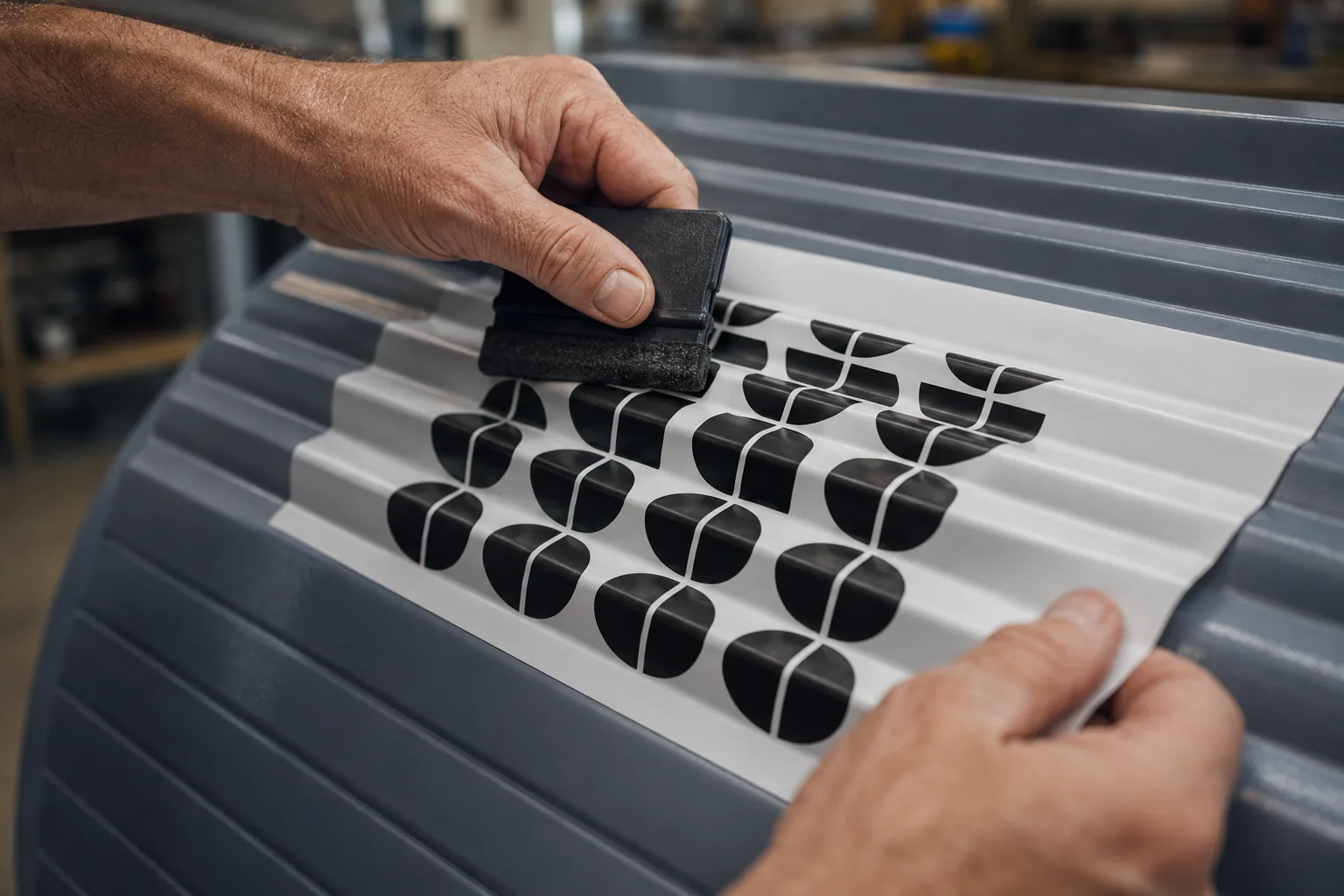

Industrial-grade print means a label engineered as a system
facestock, adhesive, ink and the surface it goes on — and qualified against the environment it will actually live in. Flywheel manufactures decals, labels, graphic overlays and nameplates for OEM equipment, fleet and industrial applications where a label failure is a warranty claim, not a cosmetic problem.

How consumer stock fails

Specified against the failure mode

Every number needs its basis

Cast vinyl

Calendered vinyl (polymeric)

Calendered vinyl (monomeric)

Polyester (PET)
Polycarbonate
The basic rule
A laminate can protect a printed label, but it cannot make the label last longer than its least durable component.
The finished product is only as durable as the combination of film, adhesive, ink and laminate used to make it. If one of those materials is rated for five years, adding a seven-year laminate does not turn it into a seven-year product.
Durability ratings also come with conditions. They may apply only to unprinted film, vertical installation and a particular climate. Printing, sun exposure, heat, chemicals and abrasion can all shorten the product’s life.
So, when someone gives you a durability number, ask what materials and conditions that number is based on. A reliable supplier should be able to support the claim with technical documentation from manufacturers such as 3M, Avery Dennison, KPMF or Brady.
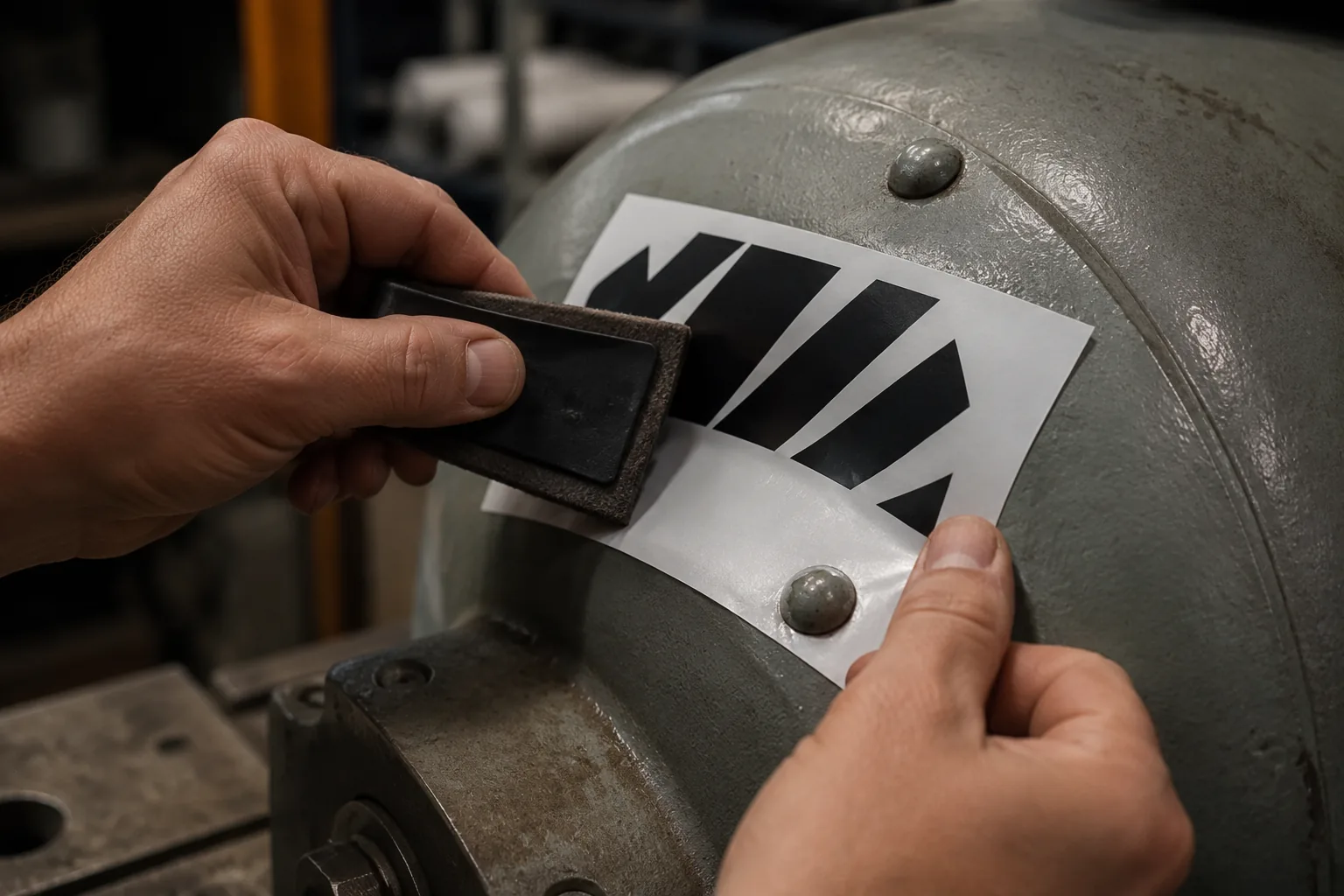
Raising the surface energy
Peel adhesion
Shear adhesion
UV and weather
Temperature
Chemicals
Abrasion
Edge lift and tunnelling
Plasticiser migration
Adhesive creep
Surface contamination
Fade and UV degradation
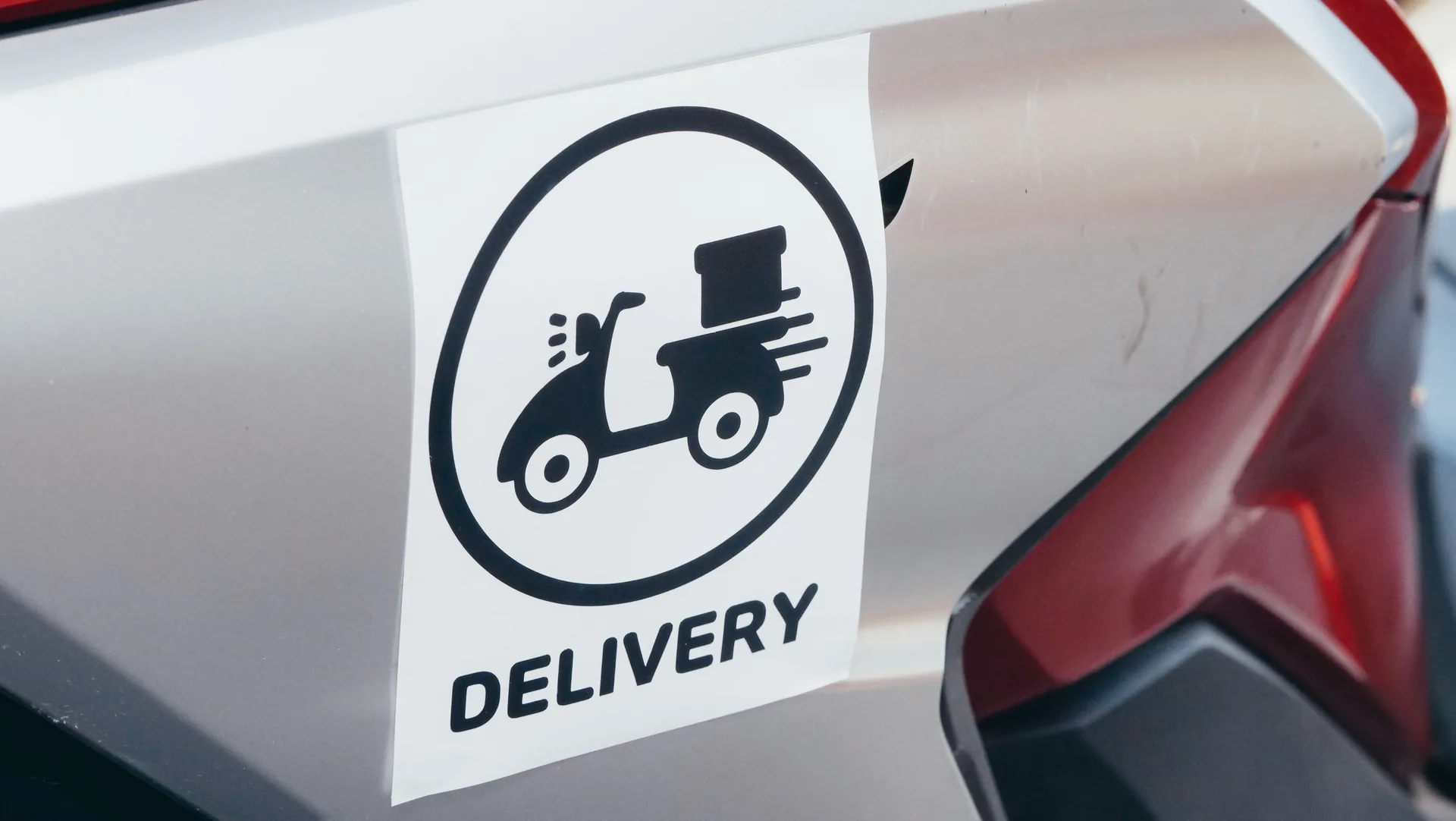
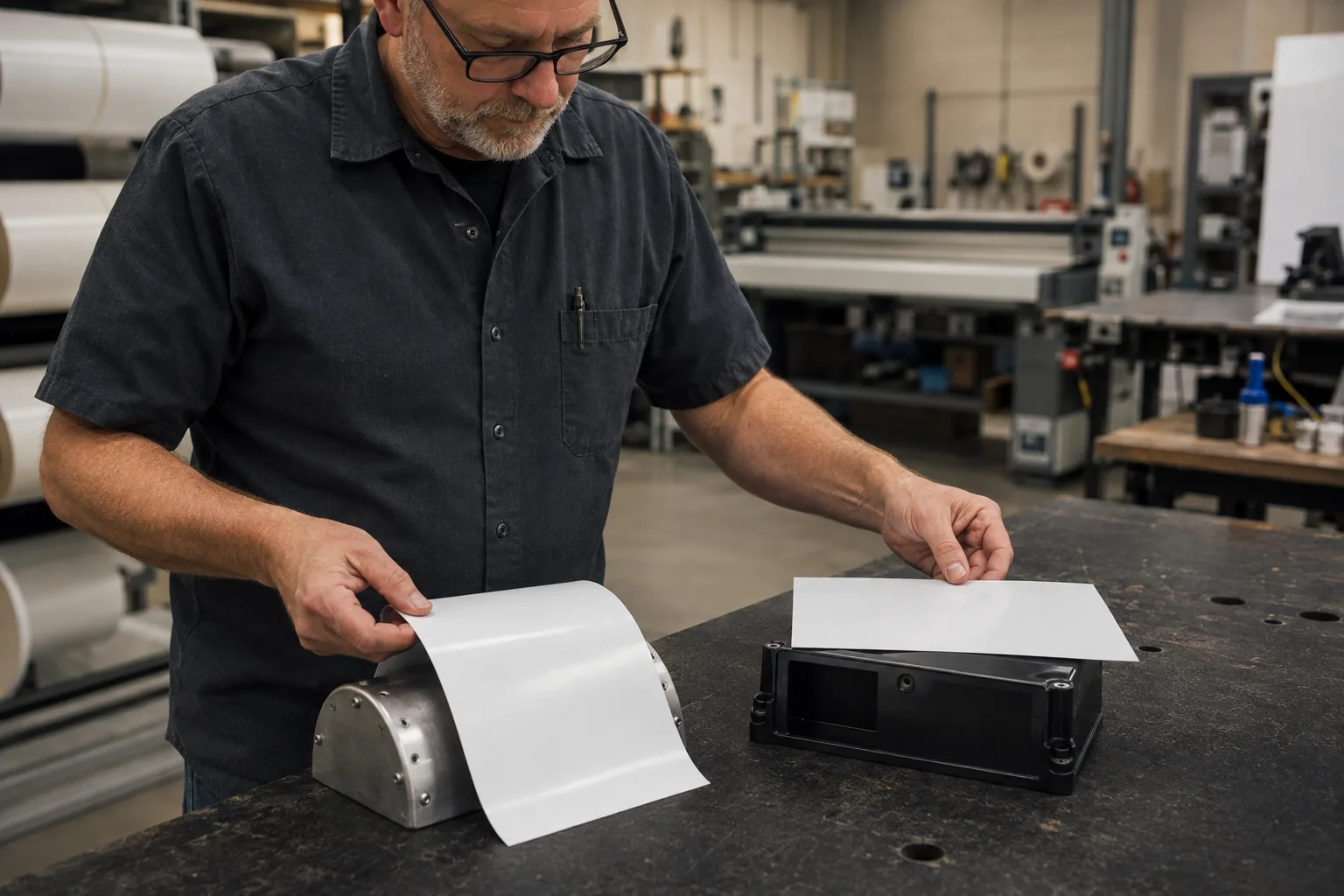
Unleash the power of Monster Stick, a proprietary product from Flywheel Brands, Inc. that redefines how decals adhere to textured and uneven surfaces. Its unique flexible vinyl, specially designed to contour seamlessly to various textures, sets Monster Stick apart from its competitors. This innovative vinyl is equipped with an aggressive hi-tack acrylic adhesive, making it perfect for challenging applications such as those over rivets or mounting hardware.
The rest of the guide
Definitions, certifications, the product pages, and the deeper reading behind the figures in this guide.
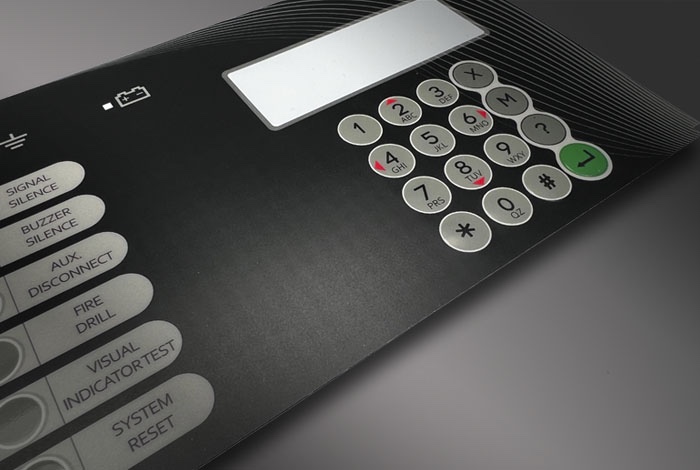
Industrial print glossary
Plain-English definitions of the terms in this guide — dyne level, PSA, overlaminate, kiss-cut vs. butt-cut, and more.

UL 969 and label certifications
What UL 969 tests, how to decode CCNs, and what procurement should verify before specifying labels.

Industrial print solutions
Ready to buy rather than research? See Flywheel's industrial print services and request a quote.

How to apply your decal
A step-by-step application guide that prevents the most common install failures.
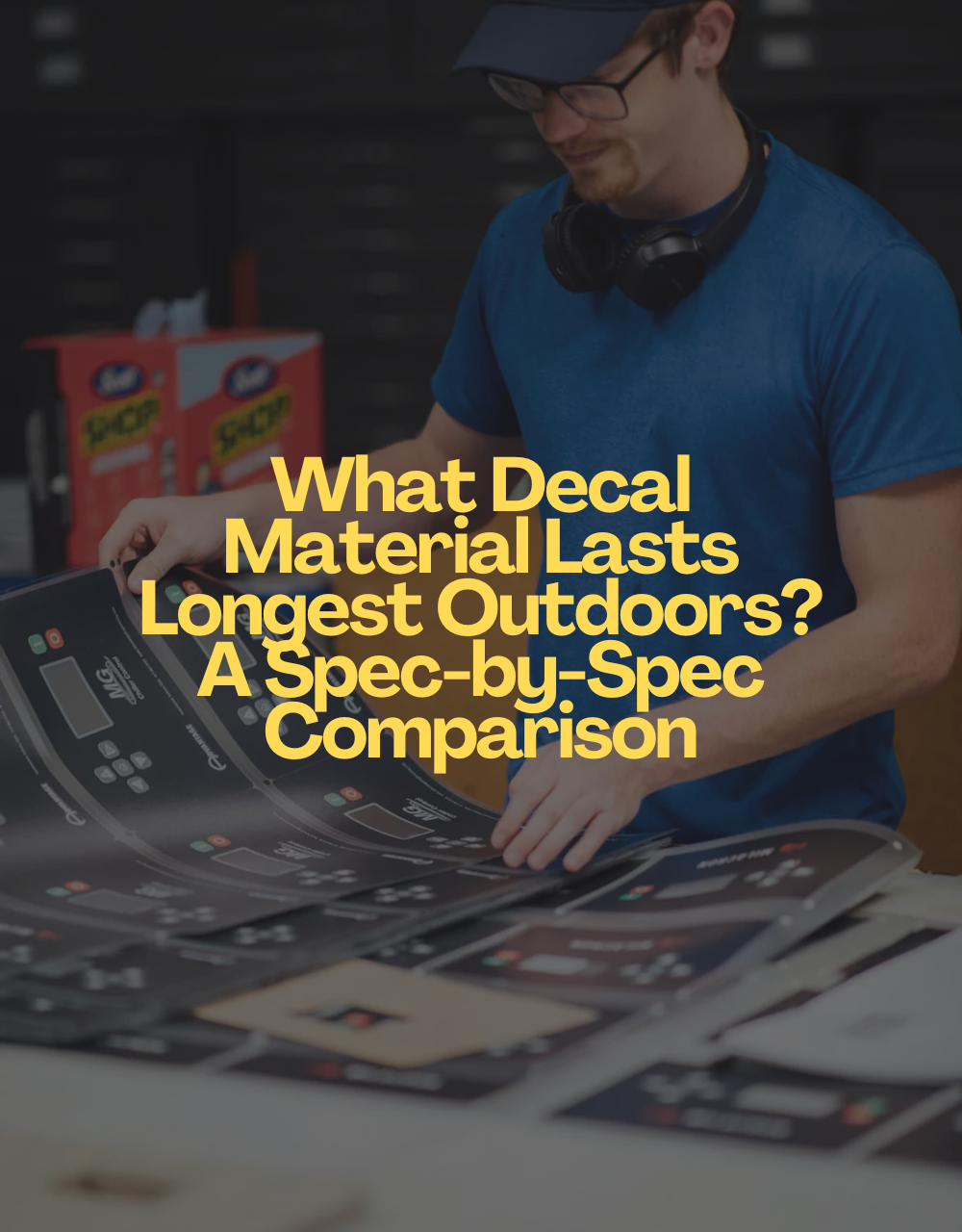
Outdoor service life: what lasts longest
The longest-lasting outdoor decal is cast vinyl under a UV-stable overlaminate, which 3M rates at 8 years for its standard printed-and-laminated construction.
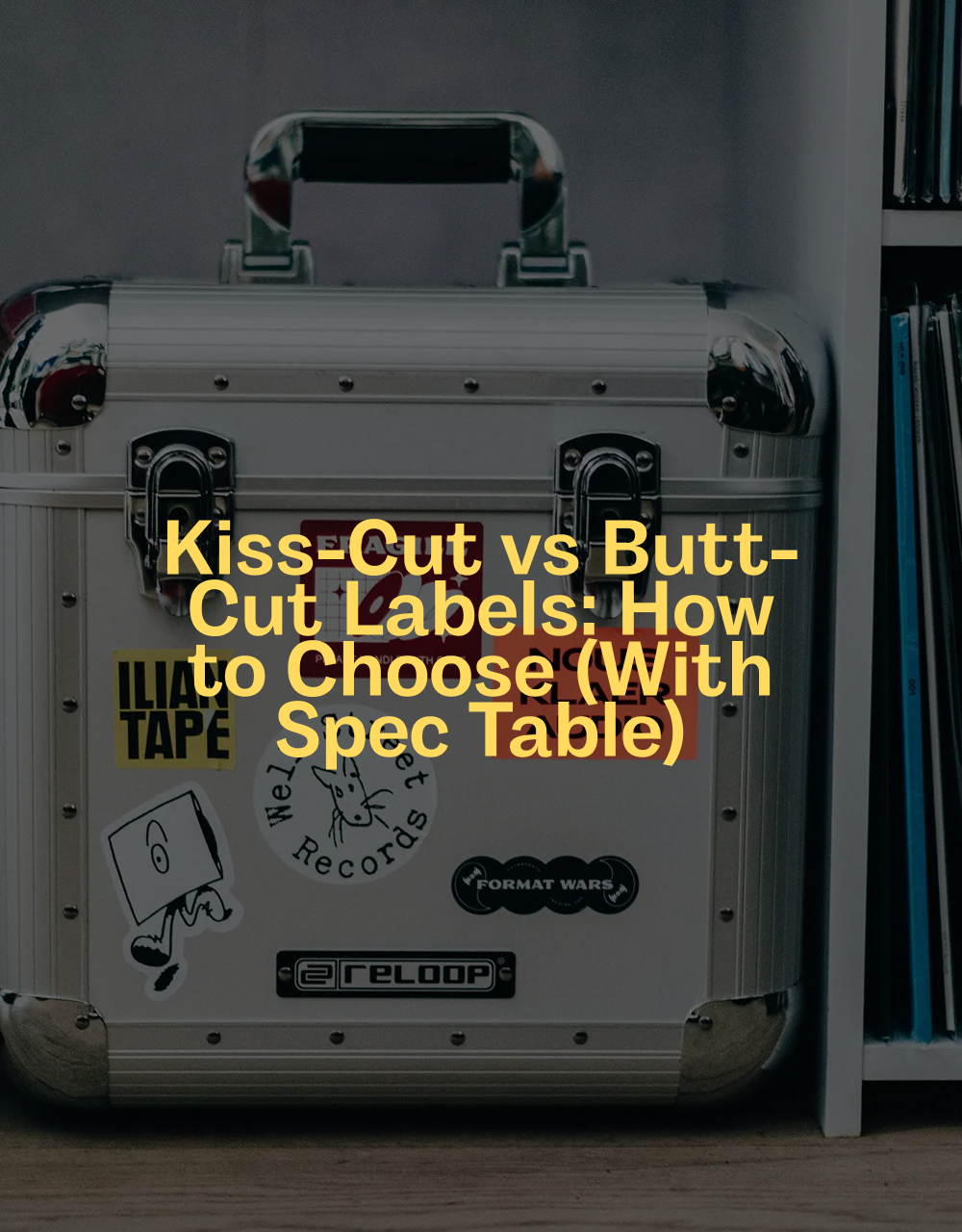
Kiss-cut vs. butt-cut: the spec decision
Kiss-Cut vs Butt-Cut Labels: How to Choose (With Spec Table): Choose kiss-cut labels when they'll be peeled by hand off a backer or fed from a roll or sheet, or when the shape is anything but a plain rectangle.
FAQs
The construction is specified against a failure mode and an environment rather than an appearance. That usually means cast vinyl, polyester or polycarbonate rather than monomeric calendered vinyl, an adhesive matched to the actual substrate, and a stated basis for every durability figure.
By duty cycle. Cast vinyl holds its dimensions and is rated 8+ years outdoors, so it earns its cost on vehicles, equipment, and anything long-term or curved. Polymeric calendered vinyl covers 5–7 year flat-surface work. Monomeric calendered vinyl is a promotional material: expect shrinkage and edge lift within about a year outdoors.
Cast vinyl carries published ratings of 8 to 10 years unprinted in vertical exposure; polymeric calendered about 7; monomeric about 2. Those figures halve between 10 and 45 degrees off vertical and carry no warranty beyond 45 degrees. Printed and laminated constructions rate lower than the bare film.
Usually because of wax, PTFE or slip additives in the powder rather than the resin itself. They migrate to the surface during cure and leave a low-energy film a standard adhesive cannot wet. The fix is a higher-tack adhesive at heavier coat weight, a change to the powder specification, or both.
No. Durability follows the lowest-rated component in the construction and cannot be extended by a longer-lasting overlaminate. Lamination protects against abrasion and chemical contact, which is a different benefit.
Substrate and finish, surface condition, service and application temperature, indoor or outdoor with mounting angle, chemical exposure by agent and duration, expected service life, and any certification requirement such as UL 969 with the substrate it must cover.

Ready to get started with Flywheel?
Got some ideas but not sure how to execute?