


Eco-Friendly Promotional Products That Actually Get Used (Not Just Gifted)
Eco-friendly promo products often fail for one reason, they get made to be sustainable, not useful. Here’s what actually gets used and keeps your brand visible.

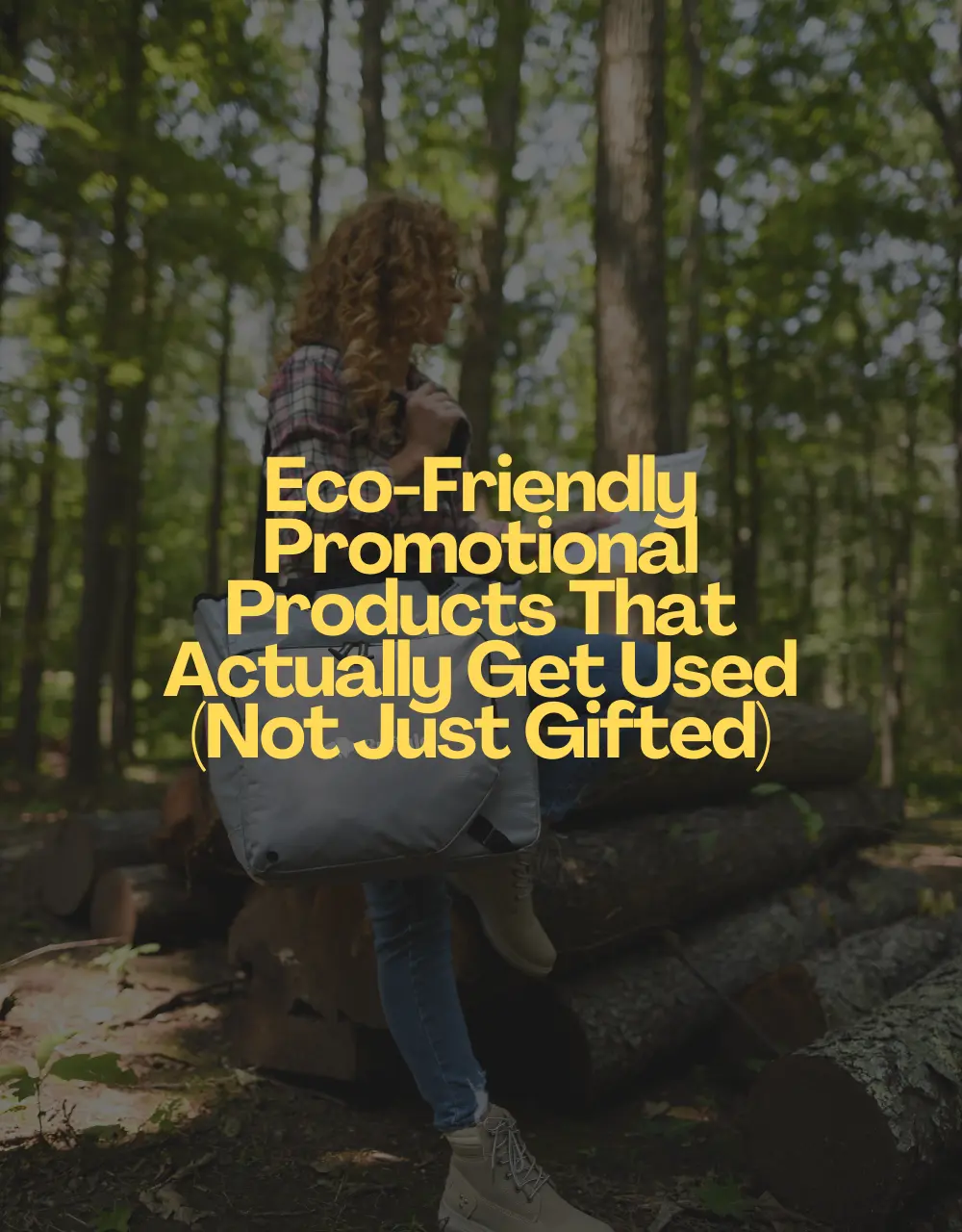
Most eco-friendly promotional products have a sustainability problem that nobody talks about. They are made from recycled materials, shipped in compostable packaging, and then put in a drawer and never touched again. Good intentions, zero impact.
The point of sustainable promotional merchandise is not just to tick a box for your ESG report. It is to put something in someone's hands that they will actually use, keep, and associate with your brand for months or years to come. An eco promotional product that sits untouched achieves nothing, not for your brand, not for the planet.
This guide covers what actually works, why most eco-friendly promotional giveaways miss the mark, and how to choose environmentally friendly promotional products that earn a permanent place in someone's daily routine.
Why Most Eco-Friendly Promotional Items Get Ignored
The problem is rarely the materials. Recycled cotton, bamboo, RPET, organic canvas, these are all genuinely sustainable choices. The problem is that sustainability gets treated as the entire brief, and usefulness becomes an afterthought.
A tote bag made from recycled plastic bottles is a good idea in principle. But if it is flimsy, awkward to carry, and branded with a logo that covers the entire front panel, it will be used twice and forgotten. The sustainability credentials do not save it from being a bad product.
The same principle applies across every category. Bamboo cutlery sets that do not fit in a pocket. Seed paper notebooks that are too thin to write in comfortably. Recycled pens that scratch rather than write smoothly. The intention was right. The execution let it down.
What Makes an Eco-Friendly Promotional Product Worth Giving
The best sustainable promotional products share a few things in common that have nothing to do with the material they are made from.
It has to be genuinely useful
Useful products get used. That sounds obvious, but it is the single factor that separates eco-friendly promotional products that create lasting brand impressions from the ones that go straight in the recycling bin. The product has to solve a real problem or fit naturally into someone's existing routine.
A quality reusable water bottle goes everywhere with the recipient. A well-made tote bag replaces plastic carrier bags on every shopping trip. A practical notebook gets used until the last page. These are not glamorous categories, but they are ones where a good product earns daily visibility for your brand.
Quality has to match the sustainability story
There is a credibility gap in sustainable branded merchandise that brands often underestimate. If you tell someone an item is made from recycled materials and then hand them something that feels cheap, it sends a message about how seriously you take sustainability. Quality and eco credentials need to go together, not trade off against each other.
Environmentally friendly promotional products at the premium end of the market have closed this gap significantly. RPET fleeces that feel as good as virgin polyester. Organic cotton tees that fit and wash well. Bamboo drinkware that keeps temperature as effectively as plastic alternatives. The options are better than they were three years ago.
The branding has to work with the product, not against it
Heavy logo placement is one of the most common reasons people do not use promotional products, sustainable or otherwise. A logo that takes up a third of the front of a tote bag turns a useful item into a billboard. Subtle, well placed branding that complements the product design is the approach that actually gets worn and carried.
Eco-Friendly Promotional Products That Consistently Get Used
Based on what actually ends up being used rather than discarded, here are the categories that deliver results.
Reusable drinkware
This is consistently the highest performing category in sustainable promo items. A quality insulated bottle or reusable cup fits into almost every daily routine and gets used multiple times a day. The brand gets visibility every time someone reaches for it at their desk, in a meeting, at the gym, or on a commute.
The key is quality. A bottle that keeps drinks cold for 12 hours and does not leak gets used for years. One that fails to do either ends up at the back of a cupboard inside a month. This is not the category to cut costs on.
Organic and recycled apparel
Apparel is the promotional product with the longest potential lifespan. A well made organic cotton t-shirt or recycled fleece that someone actually wants to wear is a walking brand impression for two to three years or more. The challenge, as with all promotional apparel, is choosing fits and styles that people genuinely want rather than items that look like they were designed for a trade show stand.
Modern fits, considered colour palettes, and minimal logo placement are what separate eco-friendly swag apparel that gets worn from branded clothing that does not.
Practical bags made from sustainable materials
Reusable bags remain one of the most practical eco-friendly promotional giveaways when the quality is right. RPET bags from recycled plastic bottles, organic cotton totes, and canvas shopper bags all have genuine everyday utility. The difference between one that gets used and one that gets forgotten is usually construction quality, reinforced handles, a base that holds its shape, a size that is actually practical.
Recycled stationery and notebooks
A well made notebook with recycled or FSC certified paper and a cover made from sustainable materials is a practical desk item that stays visible throughout the working day. The product has to earn its place though. Thin paper, a cover that warps, or pages that do not lie flat will see it replaced quickly. A notebook that people want to use is one of the most cost-effective forms of brand visibility available.
Sustainable tech accessories
Wireless chargers, cable tidies, and laptop accessories made from bamboo, recycled plastics, or other sustainable materials have strong appeal for professional audiences. They address a genuine daily need, they sit on desks where they are seen constantly, and they have a long working life. Sustainable promotional merchandise in the tech category tends to carry a higher price point but delivers proportionally better longevity of use.
How to Choose Eco-Friendly Promotional Products That Reflect Your Brand
The product is only part of the decision. How you choose it matters just as much.
1. Start with the recipient, not the product. Who is receiving this? What does their daily life look like? What would genuinely be useful to them? A field sales team has different needs to a remote workforce. A conference delegate has different needs to a new employee. The most effective environmentally friendly corporate gifts are chosen for a specific person or group, not selected from a catalog and distributed universally.
2. Check the sustainability credentials properly. Eco-friendly is not a regulated term. Anyone can call a product eco-friendly. Look for specific certifications: GOTS for organic textiles, GRS for recycled materials, FSC for paper products, B Corp status for suppliers who take their environmental commitments seriously across the whole business. Vague claims about being "made with sustainable materials" deserve more scrutiny.
3. Match the quality to the message. If your brand positioning is premium, your eco promotional products need to reflect that. Sustainable promotional items do not have to mean basic. There are excellent options across every quality tier, but the product needs to be consistent with the impression your brand wants to make.
4. Think about the whole journey. A product made from recycled materials that is shipped individually in single use plastic packaging has a compromised sustainability story. Ask your supplier about packaging, shipping consolidation, and end-of-life considerations. The most credible environmentally friendly promotional products have a clean story all the way through.
5. Order samples before you commit. This is the step most buyers skip and most regret. The product that looked good in a catalog photograph can feel very different in person. Order samples of anything you are considering at volume, test them properly, and make the decision based on what arrives in your hands, not what looks good on screen.
The Question Worth Asking Before Every Order
Before committing to any eco-friendly promotional product, there is one question that cuts through most of the noise: would the person receiving this actually use it in their daily life if the branding was not there?
If the answer is yes, you are probably looking at a good product. If the answer is probably not, no amount of recycled materials or compostable packaging changes the fact that it will end up in a drawer or a bin.
Sustainable promotional merchandise done well is not about demonstrating that your company cares about the environment. It is about giving people something genuinely useful, made responsibly, that keeps your brand in their hands long after the event or meeting where they received it.
That is how eco-friendly promotional items create lasting impressions rather than lasting guilt about the drawer full of branded giveaways nobody wanted.
Looking for eco-friendly promotional products that people actually keep?
Flywheel Brands sources and manages sustainable promotional merchandise for businesses that want quality, credibility, and brand impact, not just a tick in the sustainability column. We help you choose products that reflect your brand and actually get used.
Get in touch to see what we recommend.
Our insights
Vinyl vs. Polyester Labels: Which Should You Choose?
UL 969 vs. UL 969A: Which Standard Applies to Your Label?
What Decal Material Lasts Longest Outdoors? A Spec-by-Spec Comparison

Find your ultimate branding solution.
Got some ideas but not sure how to execute?